Full automation of H2 isotope system complete; system nearly operational
-by Anneke Batenburg
Despite its potential to improve our knowledge of the global atmospheric molecular hydrogen (H2) cycle, few measurements of the H2 isotopic composition (d(D,H2)) have been published. Our laboratory at IMAU has one of the few d(D,H2) measurement setups in the world, and has contributed much to the existing dataset with measurements of samples that were collected within different projects, among others EUROHYDROS, CARIBIC and the ACTS `sustainable hydrogen’ project.
The number of samples that could be measured on the system was, until now, always limited by the many person-hours needed to operate it. A typical measurement would take one hour, and the operator would have to spend 20 minutes of that at the system, which amounts to many working hours for the collection of a dataset of some size. To reduce this time expenditure, we decided last year to shut down operation of the system for a large refurbishment with full automation of the measurements as primary goal.
Since then, our labs technicians have worked on the system intensively, and now the full automation is complete. Test runs that were made with lab target gases showed that once set up, the system is now able to perform 25 measurements or more without interference of a human operator. The measurements also showed very satisfactory stability. At the moment, first runs are being made with not-so-critical samples, and we expect to be measuring in full swing within the next weeks.
This full automation will enable us to make many more d(D,H2) measurements in a much more effective way, and will ultimately contribute to a better understanding of the global H2 cycle.

Figure 1: The `cockpit’ of the H2 isotope measurement system
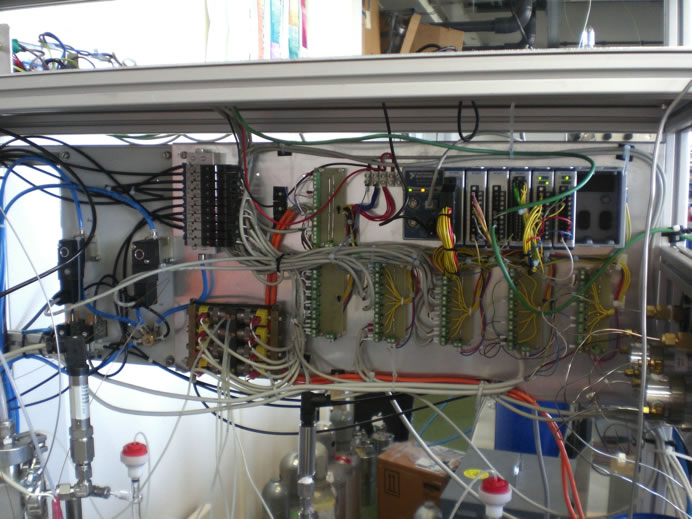
Figure 2: Some of the electronics that were added to automatically control the valves of the system
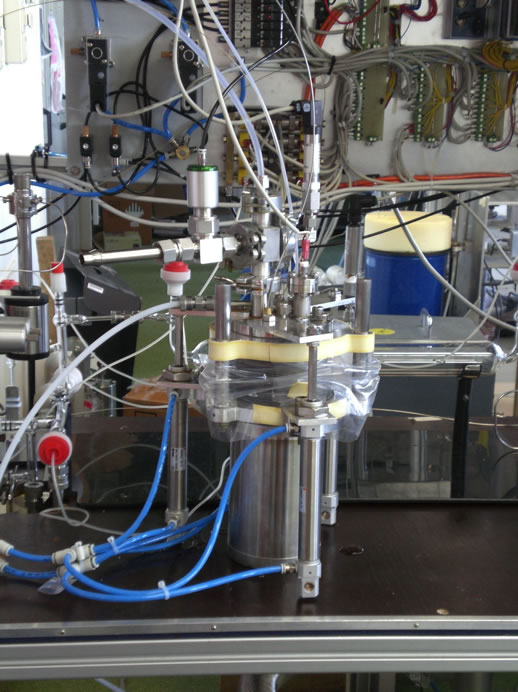
Figure 3: In this part of the system, a trap is submerged in liquid nitrogen in an airtight pot that is kept at reduced pressure. Before, the human operator had to fill the pot with liquid nitrogen before each measurement. This is now done automatically. Automating this is not trivial, since pressure buildup of evaporating nitrogen has to be avoided in order to work safely.
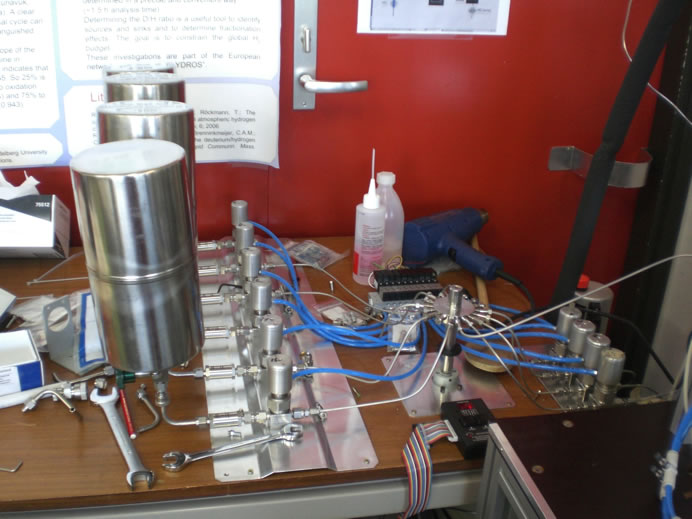
Figure 4: The automatic sample selection manifold. The big cans that are attached to the manifold in the picture contain samples that were collected in the stratosphere by a research aircraft.
Designed by M.S.

Last update: 01 January 1970